EN
EN NL
NL
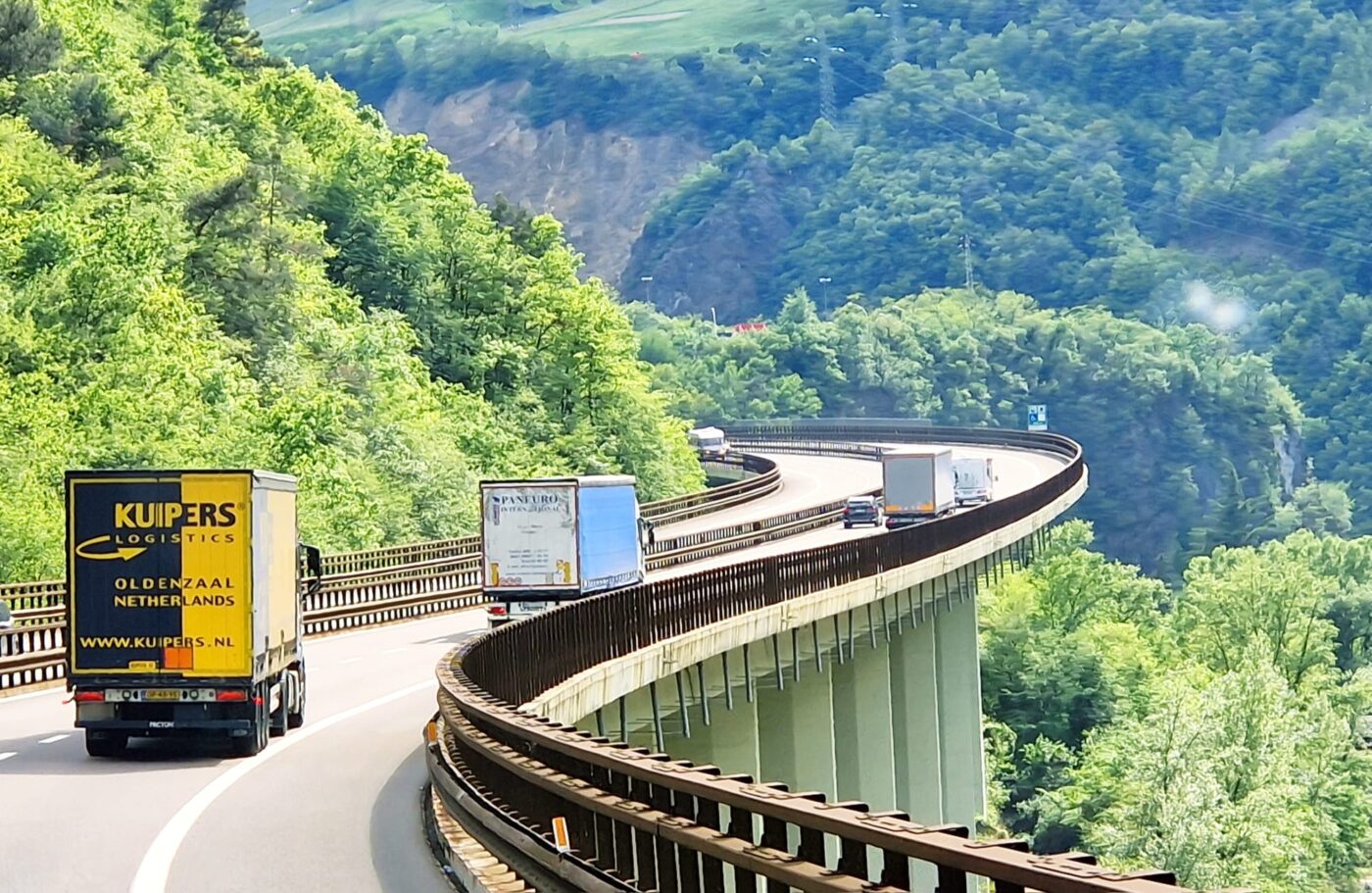
The Brenner Pass, a vital corridor for freight transport between Northern and Southern Europe, was already in the spotlight earlier this year due to scheduled road maintenance. These works are causing notable traffic delays.
Now, five months later, the Brenner Pass is once again making headlines. A recent report from TTM confirms what we’ve been experiencing firsthand: traffic flow through this key route is under pressure.
As a specialist in transport to and from Italy, these developments come as no surprise to us. In fact, we deal with the consequences on a daily basis. That’s why we believe it’s time to update you on what’s happening and what you can expect for your shipments.
What’s going on at the Brenner Pass?
The Brenner Pass has long been one of the busiest freight corridors between Northern and Southern Europe, and a popular route for holidaymakers. Since early 2025, major roadworks have been underway, including on the Lueg Bridge, located on the A13 between Innsbruck and the Italian border.
This bridge is showing serious signs of wear. The steel cables and concrete have deteriorated significantly. Partly due to decades of road salt exposure. As a result, parts of the structure are being replaced. A project expected to last into 2027.
During this time, traffic is reduced to a single lane in each direction.
Additional restrictions in Tirol
To ease traffic congestion, especially during holiday periods, the Austrian region of Tirol has implemented a series of transport restrictions, on top of existing ones. These include:
- Slot control at Kufstein: Only 100–300 trucks per hour allowed to cross
- Sectoral driving bans: Certain goods are no longer allowed to be transported by road
- Night driving bans for diesel trucks (exceptions for electric or hydrogen-powered vehicles)
- Double toll rates at night
- Emission-based driving bans on older trucks on the Inntal Autobahn
These measures, combined with the roadworks and limited rail alternatives, are creating bottlenecks. Particularly during holidays or seasonal peaks. Not just at the Brenner itself, but also on nearby alternative routes.
What are we seeing on the road?
Our planning notes that the traffic in Austria has indeed been slower in recent months. Our drivers, who are on the road daily on these routes, also notice this.
- “Traffic in Austria has definitely become slower in recent months. There are a lot of delays and traffic jams, furthermore they regularly introduce driving bans.”
- “The Brenner route is beautiful. Very scenic, but it’s frustratingly congested. Especially the Inntal stretch, which is packed with trucks.”
- “Switzerland is an expensive alternative. But if it goes well at the Gotthard, that is sometimes a better alternative.”
- “There’s a major construction site just before the Brenner. That can cause some delays, but all in all, it’s manageable.”
So, while the situation presents challenges, it’s not unworkable. The Brenner route is still open, and we continue to move freight to and from Italy without interruption.
What Can You Expect as a Customer?
There’s no reason to panic. But a few key points are worth noting:
- Transports are continuing as normal, though delays may occur on the Brenner and alternative routes due to increasing congestion.
- We actively monitor the situation and will switch to alternative routes, like through Switzerland, when it makes operational and financial sense.
- We’ll keep you informed: if any changes affect your shipment, you’ll hear from us directly.
What Can You Do?
- Plan ahead as much as possible
- Coordinate any special requirements with your account manager
- Consider being flexible with delivery timing where feasible
No Reason to Panic
The situation at the Brenner requires attention, but not alarm. We’re staying on top of all developments, and in close contact with partners across Europe.
As always, our goal remains unchanged: to get your goods to their destination safely, reliably, and efficiently.
Do you have questions about your transport to or through Italy? Feel free to get in touch. We’re happy to help.